
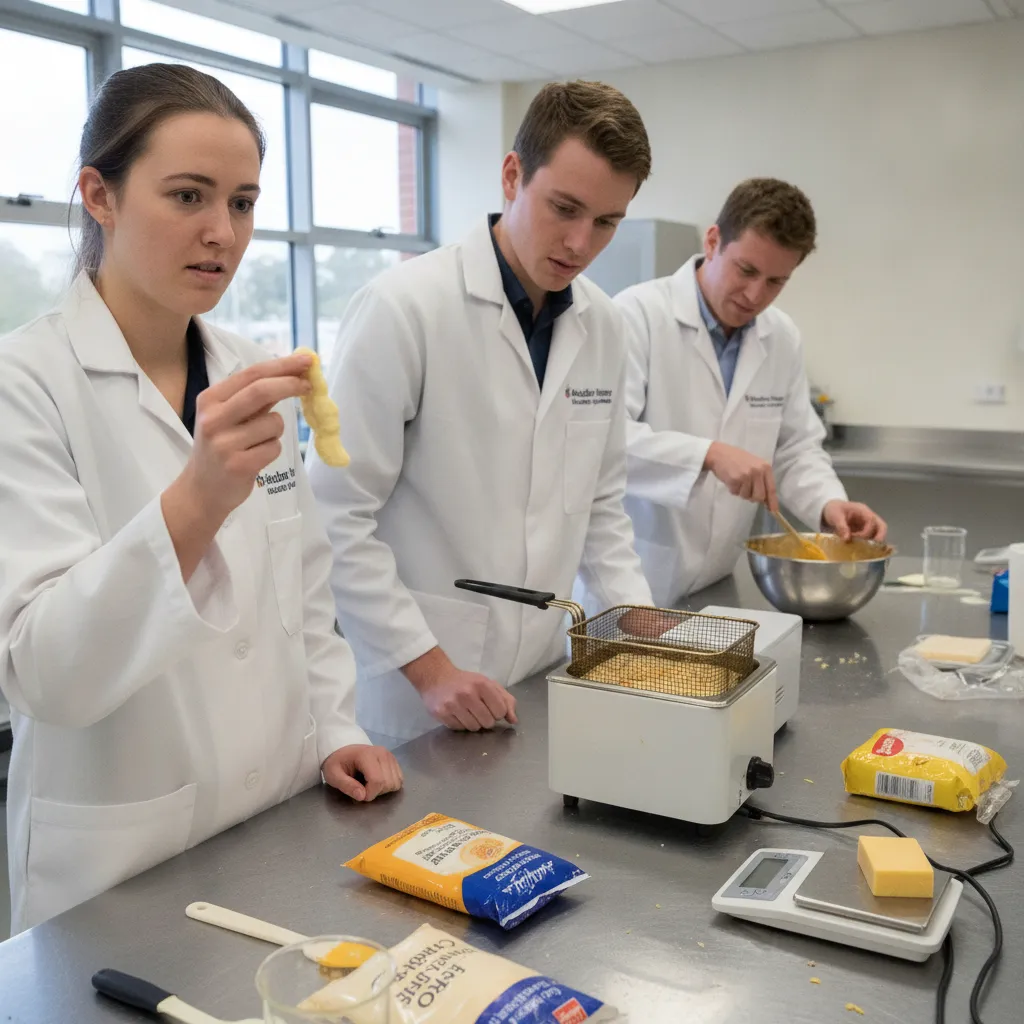
Nutrition students at Adelaide University recently took a practical approach to understanding the complexities of ultra-processed foods by attempting to recreate the iconic Australian snack, Twisties. Equipped with standard supermarket staples like corn, rice flour, and cheese, the students found that replicating the signature crunch and neon glow of the popular treat is nearly impossible using common household appliances. While they managed to create something that resembled a cheesy snack, the results fell short of the commercial version, highlighting the vast difference between home cooking and industrial food production.
Dr. Nina Wilson explained that this exercise serves as a wake up call regarding how heavily formulated modern snacks truly are. She noted that ultra-processed foods depend on specialized manufacturing processes and industrial additives that simply do not exist in a residential kitchen. By failing to mimic the exact texture and shape of the store bought curls, students gained firsthand insight into how these products move away from their whole food origins to become engineered consumables designed for maximum appeal.
The experiment arrives amid growing concerns over the prevalence of such foods in the Australian diet. Recent data indicates that a staggering percentage of new food products hitting the market are ultra-processed, with figures reaching ninety three percent for items targeted at children. These foods are often stripped of fiber and loaded with sodium, sugars, and saturated fats, contributing to broader health crises including childhood obesity and an increase in type two diabetes among adults.
Associate Professor Evangeline Mantzioris emphasized that while eliminating every processed item is unrealistic for most people, small substitutions can lead to significant health improvements. Replacing prepackaged bars or soft drinks with fresh fruit and nuts helps restore essential nutrients missing from highly formulated diets. For the university students involved in the project, however, the biggest takeaway was psychological; having seen how difficult it is to build a snack from scratch, they may never view a colorful packet of chips in quite the same way again.
Post Views: 9